


Top 5 Obedience Commands Every Dog Should Know
- Fluid K9 Dog Training
- Sep 16, 2025
- 5 min read
Updated: Oct 9, 2025

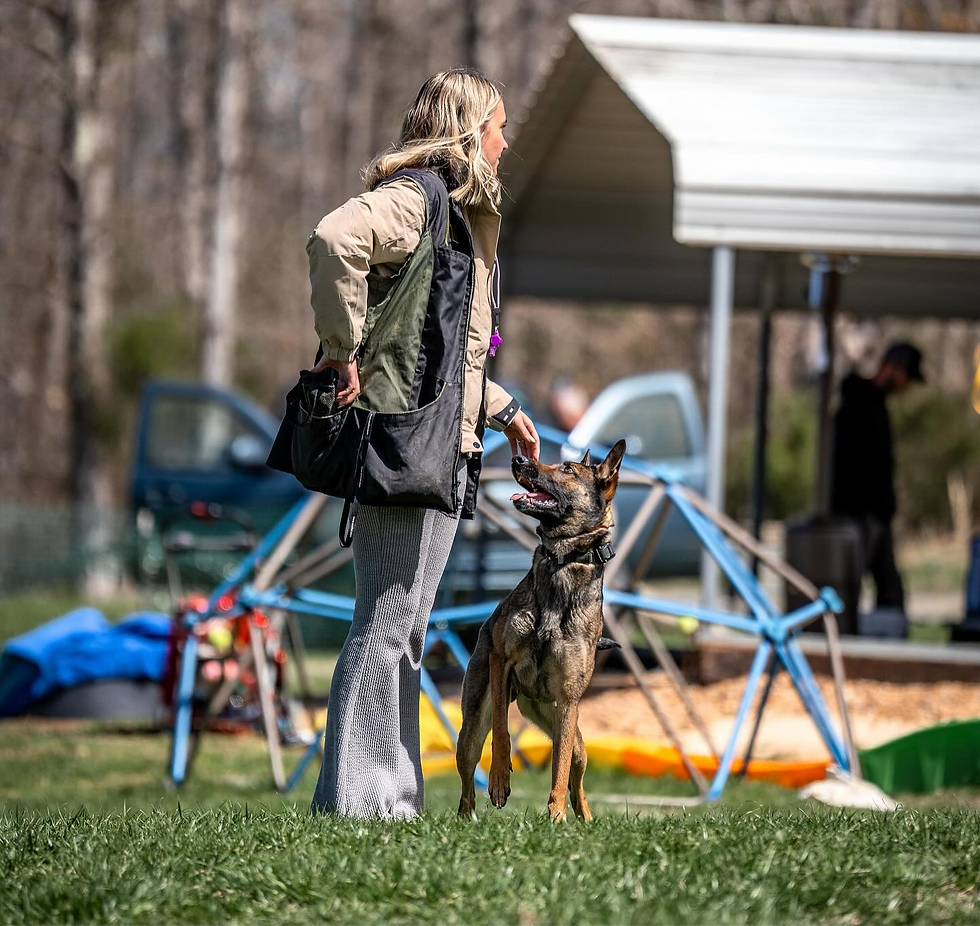
Training your dog in basic obedience is one of the most important investments you can make in your relationship with your canine companion. It not only helps in daily life but also strengthens communication and fosters mutual respect. Every dog, regardless of breed, should know a few key obedience commands to ensure they are well-mannered, responsive, and safe in different environments.
In this blog, we'll cover the top five essential dog obedience commands that every dog should learn, and provide you with helpful tips on how to teach them effectively. Whether you're training a puppy or an adult dog, these commands will serve as the foundation for more advanced training.
H2: Why Obedience Commands Are Important
Before diving into the specific commands, it’s important to understand why obedience training is essential for both you and your dog. Obedience commands help to:
Improve communication: Obedience training is the primary way you teach your dog how to understand you and follow cues. It allows you to control your dog’s behavior in different situations, whether you're in public, at home, or during playtime.
Promote safety: Commands like "stay" and "come" are essential for keeping your dog safe in potentially dangerous situations. A dog that is well-trained can be trusted off-leash and is more likely to respond appropriately in emergencies.
Strengthen the bond: Training builds trust and mutual respect. When your dog listens to your commands, it reinforces the relationship between you and your pet, leading to a more harmonious life together.
Now that we know why obedience commands are essential, let’s dive into the top 5 commands every dog should know.
H2: 1. Sit – The Basic Building Block
The sit command is one of the most basic and fundamental commands every dog should learn. It’s often the first command puppies are taught because it’s simple and effective. The sit command forms the foundation for many other obedience behaviors and is a great starting point for training.
H3: Why It’s Important:
Keeps your dog still in situations where movement would be undesirable (e.g., during grooming or while waiting at the door).
Helps your dog focus on you and improves their self-control.
Useful in emergencies when you need your dog to stop and stay put.
H3: How to Teach It:
Hold a treat in front of your dog’s nose, then slowly raise it above their head. As their head follows the treat, their bottom will naturally lower to the ground.
As soon as their bottom hits the ground, say “sit” and reward them with the treat.
Repeat the process several times and gradually increase the time your dog stays in the sit position.
H2: 2. Stay – A Command for Control
The stay command is another essential command that will help you maintain control over your dog, especially in situations where you need them to remain in one spot for an extended period. This is particularly useful during walks, visits to the vet, and when you want your dog to wait calmly before crossing the street.
H3: Why It’s Important:
Prevents unwanted movement in potentially dangerous situations (e.g., a busy street or the doorbell ringing).
Teaches patience and impulse control, which are key components of good behavior.
Improves reliability in various situations, from home to public places.
H3: How to Teach It:
Start by asking your dog to sit. Once they are sitting, hold your hand up in front of their face, palm facing them.
Say “stay” in a calm, firm voice.
Take a step back. If they stay in place, reward them. Gradually increase the distance and the duration of the stay.
Add distractions to the environment as your dog becomes more reliable with the command.
H2: 3. Come – The Essential Recall Command
The come command is critical for your dog’s safety. This command can save your dog’s life if they are running toward a dangerous situation, such as traffic or an aggressive dog. It’s also a great way to call your dog back during outdoor play or when they’re off-leash.
H3: Why It’s Important:
Vital for safety in unpredictable situations, like busy streets or off-leash play areas.
Prevents escape by getting your dog to return to you when they start wandering away.
Strengthens the bond as your dog learns that coming to you is a positive experience.
H3: How to Teach It:
Start indoors in a quiet, controlled environment. With your dog on a leash, say the word “come” in a friendly, enthusiastic tone.
Gently tug on the leash to guide them toward you, and reward them with treats and praise when they arrive.
Gradually increase the distance and practice in more distracting environments as your dog becomes more reliable.
H2: 4. Down – The Command for Relaxation
The down command is essential for teaching your dog to settle down and relax, especially when they are excited or overstimulated. It’s a useful command during situations where calmness is necessary, such as in a crowded park or in the presence of guests.
H3: Why It’s Important:
Encourages calm behavior and self-restraint.
Helps with impulse control, especially if your dog tends to be excitable or jumpy.
Useful for teaching your dog to settle and stop being overly reactive to stimuli.
H3: How to Teach It:
Start with your dog in a sitting position. Hold a treat close to their nose and slowly move it toward the floor, between their paws.
As they lower their body to the ground to follow the treat, say “down” and reward them when they’re lying flat.
Practice until your dog can go down with just a verbal cue and hand signal.
H2: 5. Leave It – A Command for Safety
The leave it command is a must-learn for all dogs, as it prevents them from picking up dangerous or inappropriate items, such as food on the ground, trash, or toxic substances. This command is also helpful during walks or when your dog is tempted by distractions.
H3: Why It’s Important:
Prevents ingestion of dangerous objects, such as spoiled food, sharp items, or harmful substances.
Teaches impulse control, as your dog learns not to grab something they find appealing.
Improves overall control during walks and outings.
H3: How to Teach It:
Hold a treat in one hand and let your dog sniff it. With the other hand, cover the treat and say “leave it.”
When your dog pulls back or stops trying to get the treat, reward them with a different treat.
Gradually introduce more distractions and practice in different settings to reinforce the behavior.
H2: Conclusion: Building a Strong Foundation for a Well-Behaved Dog
Training your dog in these basic obedience commands creates a foundation for a well-mannered, responsive, and safe pet. Whether you're teaching your dog for the first time or reinforcing learned behaviors, these commands will help you establish clear communication and promote positive behavior.
With Fluid K9 Dog Training, we focus on building a solid foundation of obedience and trust. If you’re looking for a structured training program or need help with obedience training, contact us today!
📍 Cary, NC | 📞 (787) 486-5672 | ✉️ lugocor@gmail.com Schedule a Consultation


Comments